

No image represents Saint Lucia quite like the Pitons — the two dramatic volcanic peaks rising straight out of the sea near Soufrière. They're on the flag, on every postcard, and on the bucket list of nearly everyone planning a trip to the island. This guide covers everything worth knowing about Gros Piton and Petit Piton: what they actually are, whether you can hike them, how tall they are, and the best ways to see them if climbing isn't for you.
Most Pitons excursions start from Soufrière or a nearby resort, and the road down from the north or the airport is narrow and winding. Booking a private Pitons tour or airport transfer in advance takes that stress off your plate entirely.
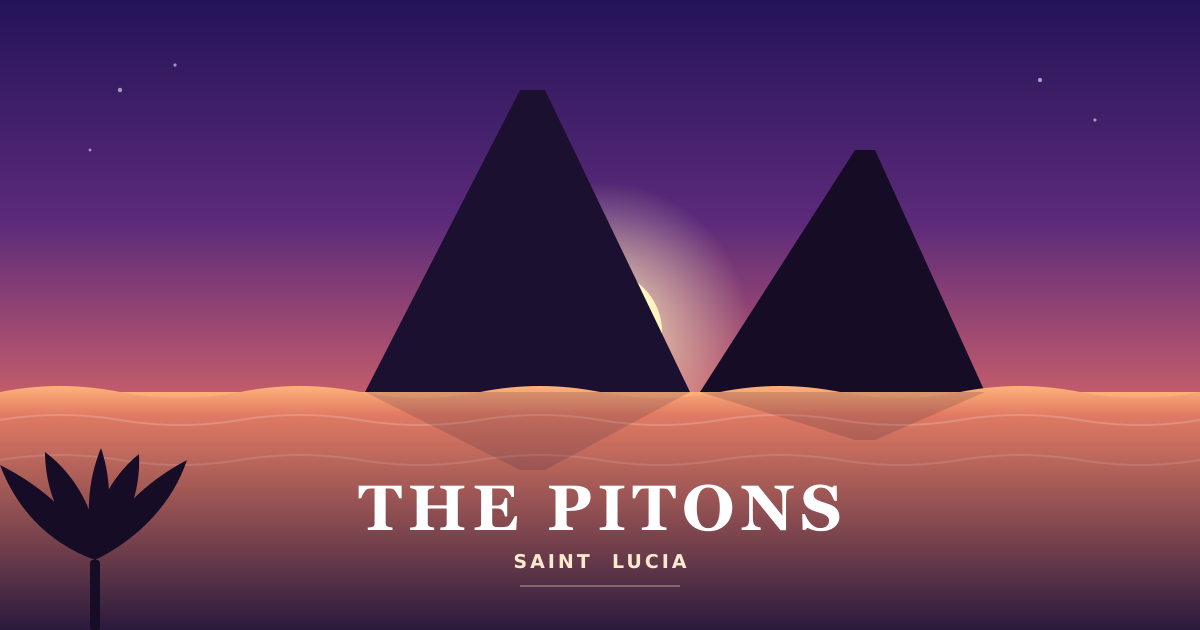
Table of Contents
- What Are the Pitons?
- Gros Piton vs Petit Piton
- Are the Pitons Volcanoes?
- How Tall Are the Pitons?
- Hiking Gros Piton
- Can You Climb Petit Piton?
- Best Time to Hike the Pitons
- What to Pack for the Hike
- Alternative Ways to See the Pitons
- Hotels With the Best Pitons Views
- Quick Pitons Facts
- Frequently Asked Questions
What Are the Pitons?
The Pitons are two steep volcanic spires — Gros Piton and Petit Piton — located side by side on the southwest coast of Saint Lucia, near the town of Soufrière. Together they form the Pitons Management Area, a UNESCO World Heritage Site recognized for its striking volcanic landscape and surrounding coral reefs. They're the single most photographed natural landmark in Saint Lucia and appear on the national flag.
Gros Piton vs Petit Piton
Despite "Gros" translating to "big" and "Petit" to "small," the difference between the two peaks is more about shape and accessibility than a dramatic size gap.
| Factor | Gros Piton | Petit Piton |
|---|---|---|
| Shape | Broader base, more rounded summit | Steeper, narrower, more dramatic spire |
| Open to Hikers | Yes, via an official guided trail | Not officially open to casual hikers |
| Difficulty | Strenuous but achievable for reasonably fit hikers | Requires technical climbing experience and permission |
| Guide Required | Yes, licensed local guide mandatory | Yes, and access is far more restricted |
In practice, almost everyone who "hikes the Pitons" is referring to Gros Piton, since Petit Piton's steep, technical terrain makes it unsuitable for casual hikers and access is tightly controlled.
Are the Pitons Volcanoes?
Quick answer: Yes, the Pitons are volcanic in origin. They're the remnants of lava domes formed by volcanic activity roughly 200,000 years ago, part of the same volcanic system that includes the nearby Sulphur Springs. Neither peak is currently an active, eruptible volcano in the way most people picture, but the surrounding area, including Sulphur Springs, still shows ongoing geothermal activity.
How Tall Are the Pitons?
- Gros Piton stands at approximately 786 meters (2,579 feet)
- Petit Piton stands at approximately 743 meters (2,438 feet)
- Despite the name suggesting otherwise, Petit Piton is actually the steeper and more visually striking of the two, even though Gros Piton is slightly taller
Hiking Gros Piton
Hiking Gros Piton is one of the most popular outdoor activities in Saint Lucia, and it's achievable for most reasonably fit travelers, though it should not be underestimated.
- Round trip typically takes 3 to 4 hours, depending on pace and fitness
- The trail is steep, uneven, and can be slippery, especially after rain
- A licensed local guide is mandatory — this isn't optional and it isn't just red tape, since guides know the terrain, pacing, and safety considerations intimately
- Reaching the summit rewards hikers with sweeping views over Soufrière, Petit Piton, and the Caribbean Sea
- Guides are typically arranged through the Gros Piton Nature Trail office in Fond Gens Libre or via a pre-booked tour
Booking your Pitons hiking tour in advance means your guide, permit, and transport are all sorted before you land, rather than trying to arrange everything last-minute in Soufrière.
Can You Climb Petit Piton?
Technically yes, but it's a very different undertaking from Gros Piton. Petit Piton's ascent is steep, exposed, and requires scrambling and rope sections in places, making it more of a technical climb than a hike. Access is far more restricted, permission from local authorities is typically required, and it's generally attempted only by experienced climbers with a specialized local guide — not a casual holiday activity for most visitors.
Best Time to Hike the Pitons
Timing your hike around St Lucia's dry season makes a real difference to how enjoyable — and safe — the trail feels underfoot.
- The dry season, roughly November through April, offers firmer trail conditions and clearer summit views
- Early morning starts are best, both to avoid the midday heat and to reduce the chance of afternoon showers during the wetter months
- During the rainy season (May–October), the trail can become significantly more slippery, so check conditions with your guide before booking
What to Pack for the Hike
- Sturdy hiking shoes or boots with good grip — this is not a hike for sandals
- At least 1.5–2 litres of water per person
- Sun protection: hat, sunscreen, and sunglasses
- A light rain layer, even in the dry season, since mountain weather can change quickly
- Snacks or an energy bar for the round trip
- A camera or phone with charge for summit views
Alternative Ways to See the Pitons
If a multi-hour strenuous hike isn't for you, there are still plenty of ways to experience the Pitons up close:
- Catamaran or boat tours — sail along the coastline for a dramatic sea-level view of both peaks together
- Viewpoints around Soufrière — several roadside and hillside viewpoints offer excellent photo opportunities without any climbing
- Resort-based views — a handful of properties sit directly between the peaks, offering the view from your room or the beach
- Combined day tours — many operators pair a Pitons view with a stop at Sulphur Springs and the nearby waterfalls
These options pair well with a wider day trip — see our guide to St Lucia's top tourist attractions for how to combine the Pitons with other highlights near Soufrière.
Hotels With the Best Pitons Views
A small number of resorts sit directly in the shadow of the Pitons, making them a popular choice for travelers who want the view without leaving the property. Sugar Beach, A Viceroy Resort, sits on the beach directly between both peaks, while Jade Mountain — its adults-only sister property — is known for open-air suites facing the Pitons head-on. Both are consistently ranked among the best Pitons-view stays on the island, though they command a premium for the location.
Quick Pitons Facts
- The Pitons Management Area became a UNESCO World Heritage Site in 2004
- Both peaks are covered in tropical forest, home to rare birds and plant species found nowhere else
- The surrounding waters form a protected marine reserve, popular for snorkeling and diving
- The Pitons appear on Saint Lucia's national flag, representing the island's hope and aspiration
- Gros Piton's trail is maintained and guided through a local community-based program in Fond Gens Libre
For the official heritage listing and conservation details, the UNESCO World Heritage entry for the Pitons Management Area is a good primary source, alongside the Saint Lucia Tourism Authority for current visitor guidance.
Frequently Asked Questions
Can you hike the Pitons in St Lucia?
Yes — Gros Piton has an official guided trail open to reasonably fit hikers. Petit Piton is a technical climb with much more restricted access.
How tall are the Pitons?
Gros Piton is about 786 meters (2,579 feet), and Petit Piton is about 743 meters (2,438 feet).
Are the Pitons volcanoes?
Yes, they're volcanic lava domes formed roughly 200,000 years ago, part of the same system as the nearby Sulphur Springs.
Do you need a guide to hike Gros Piton?
Yes, a licensed local guide is mandatory for the Gros Piton trail — it isn't optional.
How long does it take to hike Gros Piton?
Round trip typically takes 3 to 4 hours, depending on fitness and pace.
What is the best way to see the Pitons without hiking?
A catamaran or boat tour along the coast gives a dramatic view of both peaks together, without any climbing required.
Which hotels have the best view of the Pitons?
Sugar Beach and Jade Mountain both sit directly between the peaks and are widely considered to have the best Pitons views on the island.
Final Thoughts
Whether you hike Gros Piton, admire both peaks from a catamaran, or simply watch the sunset from a Soufrière resort balcony, the Pitons are worth building a full day around. If you do plan to hike, book your guide ahead of time, start early, and treat it as the genuine physical challenge it is rather than a casual walk — the views from the top are the reward for taking it seriously.
Planning a Trip to the Pitons?
Get a guided Pitons hike, a Soufrière day tour, or a private transfer sorted before you land. Book with St Lucia Taxi & Tours.