
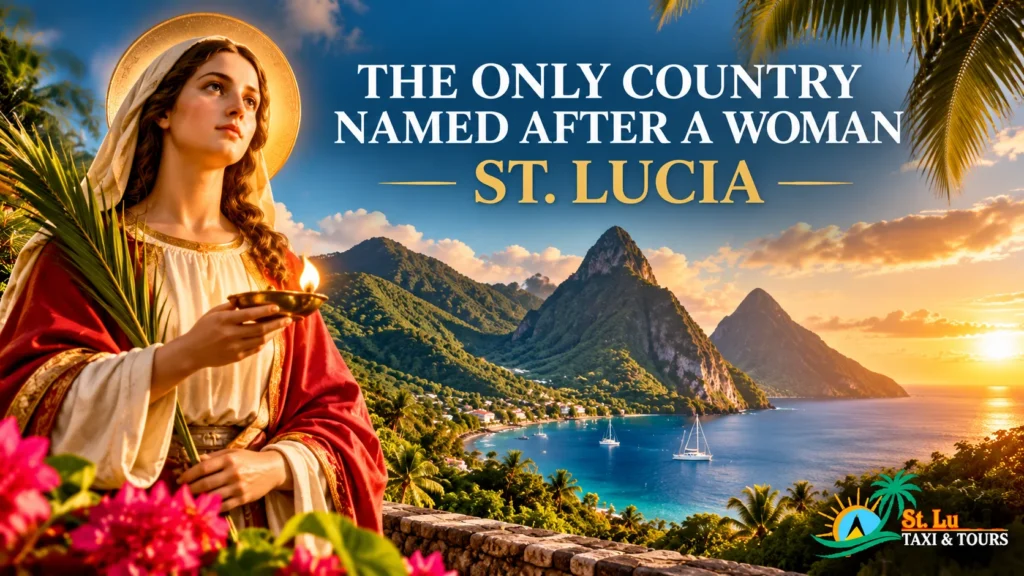
What Is the Only Country Named After a Woman? Meet St. Lucia
Of the world’s nearly 200 nations, just one is named after a real historical woman. This is the story of that country, the remarkable woman behind the name, and why no other nation shares the distinction.
It’s one of those facts that stops you mid-scroll: out of every country on the planet, only a single one is named after a woman. Nations are overwhelmingly named for men, mythical figures, geography or languages — so a country named for a real, documented woman is genuinely one of a kind.
That country is St. Lucia, the lush Caribbean island named after Saint Lucy of Syracuse. Below, we explain exactly why it holds this unique title, who Saint Lucy was, how the island came to carry her name, and why famous exceptions like Ireland don’t quite count.
The only country named after a woman is St. Lucia — a Caribbean island nation named in honour of Saint Lucy of Syracuse, a fourth-century Christian martyr and the patron saint of the blind. It is the only sovereign country in the world named after a real historical woman.
The AnswerWhich Country Is Named After a Woman?
The country named after a woman is St. Lucia (also written Saint Lucia), an island nation in the eastern Caribbean. Its capital is Castries, and it’s best known to travelers for its twin Pitons, rainforest and volcanic scenery. But its name carries a distinction no other country can claim: it is the only sovereign nation named after a real historical woman.
Every other “Saint” country and territory in the Caribbean is named after a man — Saint Kitts (short for Saint Christopher), Saint Vincent, and so on. St. Lucia stands alone with a feminine namesake, which is why the fact has become such a popular piece of trivia and a point of national pride.
The NamesakeWho Was Saint Lucy of Syracuse?
Saint Lucy — Santa Lucia in Italian — was a young Christian woman born around 283 AD in Syracuse, on the island of Sicily. According to tradition, she came from a wealthy family, devoted herself to her faith and to helping the poor, and was martyred during the Diocletianic persecution of Christians in the early fourth century, around 304 AD.
She is venerated as the patron saint of the blind and of those with eye trouble, and is often depicted holding a dish or a lamp. Fittingly, her name comes from the Latin word lux, meaning “light.” Her feast day is celebrated on December 13, and she remains widely honoured far beyond Sicily — from Scandinavia, where Saint Lucy’s Day (Luciadagen) marks the start of the Christmas season, to the Caribbean island that carries her name.
The Origin StoryHow St. Lucia Got Its Name
Long before Europeans arrived, the island was home to the Indigenous Arawak and later the Kalinago (Carib) peoples, who knew it by names including Louanalao and Hewanorra — generally translated as the “Land of the Iguanas.” That older name hasn’t vanished: Hewanorra lives on today as the name of St. Lucia’s main international airport.
The island’s current name is tied to a well-known legend. As the story goes, a group of French sailors were shipwrecked on the island on December 13 — the feast day of Saint Lucy — in the early 1500s, and named the place in her honour. Spanish records later referred to it as “Sancta Lucia,” and through waves of French and English colonization the name eventually settled into the Saint Lucia we know today.
It’s worth noting that historians treat the shipwreck story as legend rather than firmly documented fact — but what’s well established is that the island was named after Saint Lucy, and that the December 13 connection has shaped the country’s identity ever since.
The DistinctionWhy Is St. Lucia the Only One?
The key word is “only.” Plenty of towns, cities, states and landmarks around the world are named after women — but at the level of a sovereign country, named after a real, historical woman, St. Lucia stands entirely alone. Most countries take their names from male figures, tribes, languages, geographic features or mythology, which makes a real female namesake vanishingly rare.
That’s what makes the fact so striking, and why it consistently appears in trivia, quiz shows and “did you know” lists. It also gives St. Lucia a distinctive identity on the world stage — a small island with an outsized claim to fame.
The ExceptionBut Isn’t Ireland Named After a Woman?
This is the most common objection — and it’s a fair one. Ireland (Éire) takes its name from Ériu, a figure from Irish mythology. The crucial difference is that Ériu is a goddess — a mythological deity — not a real, historical person.
That’s the distinction that keeps St. Lucia unique: it is the only country named after a woman who actually lived. If you broaden the definition to include mythological female figures, then Ireland joins the list; but for a real historical woman, St. Lucia is genuinely the only one. Both framings show up online, so the honest, precise answer is: St. Lucia is the only country named after a real woman, while Ireland is named after a female deity.
Going FurtherAre There Other Places Named After Women?
Yes — just not other countries. Once you look below the national level, female namesakes appear all over the map. Queen Victoria alone lent her name to dozens of places worldwide, from the state of Victoria in Australia to Lake Victoria in Africa and cities such as Victoria in Canada. Saint Lucy herself has districts, churches and towns named after her in several countries.
But when it comes to independent nations, the list of countries named after a real woman begins and ends with St. Lucia. That’s the detail that makes the island’s name a one-of-a-kind piece of world geography.
Living HeritageDecember 13: Saint Lucy’s Day & National Day
The connection between the island and its namesake isn’t just historical — it’s celebrated every year. Because the island is tied to Saint Lucy’s feast day, December 13 is observed as the National Day of St. Lucia, blending the saint’s legacy with national identity.
Around this time the island hosts a Festival of Lights, a nod to the meaning of Lucy’s name — “light.” It’s a fitting tribute: a country named after a woman associated with light, celebrating with lanterns and illuminations each December.
At a GlanceQuick Facts & the Island’s Other Names
| Country | St. Lucia (Saint Lucia), eastern Caribbean |
| Named after | Saint Lucy of Syracuse (c. 283–304 AD) |
| Distinction | Only sovereign country named after a real historical woman |
| Meaning of “Lucia” | From Latin lux — “light” |
| Indigenous name | Louanalao / Hewanorra — “Land of the Iguanas” |
| Nickname | “Helen of the West Indies” (after Helen of Troy) |
| National Day | December 13 (Saint Lucy’s feast day) |
| Capital | Castries |
There’s a nice footnote to all this: because St. Lucia changed hands so many times between Britain and France, it earned another female nickname — the “Helen of the West Indies,” after Helen of Troy, the woman said to have launched a thousand ships. So in a sense, this small Caribbean nation is linked to two famous women — one real, one legendary.
See It YourselfVisiting the Only Country Named After a Woman
The story behind the name is a great conversation starter — but St. Lucia is even better experienced in person. This is an island of volcanic peaks, rainforest waterfalls, a drive-in volcano and calm Caribbean beaches, all packed into a compact, mountainous landscape. If the fact sparked your curiosity, you might enjoy learning where St. Lucia is located, the best places to visit, and the island’s best beaches.
If you do visit, remember that the island’s beauty comes with winding, mountainous roads. Many travelers explore with a local driver-guide, which turns the trip into a relaxed, informative day rather than a stressful drive — your guide can even share more of the island’s history along the way.
Turn the trivia into a trip
Curious enough to see the island named after Saint Lucy for yourself? From airport transfers to full-day island tours, a local team can help you explore St. Lucia comfortably and at your own pace. See why travelers rate us so highly.
Plan a St. Lucia Tour →FAQThe Only Country Named After a Woman: FAQ
What is the only country named after a woman?
Who was St. Lucia named after?
Why is St. Lucia the only country named after a woman?
Isn’t Ireland named after a woman too?
How did St. Lucia get its name?
What was St. Lucia called before?
Why is December 13 important in St. Lucia?
Where is St. Lucia located?
One Island, One Unforgettable Name
St. Lucia’s claim to fame is unique — and the island itself lives up to it. If you’re inspired to visit the only country named after a woman, a local team can help you experience it at its best.