

If you're weighing when to book your trip, you've probably already typed "St Lucia weather" or "best time to visit St Lucia" into Google more than once. It's one of the first things worth nailing down, because St Lucia's tropical climate swings between a dry, sun-heavy season and a wetter, more humid stretch — and the month you pick genuinely changes what your trip looks like.
This guide breaks down St Lucia weather by month, how conditions differ by area of the island, when hurricane season actually runs, and how to time a visit around hiking the Pitons, diving, or simply lying on a beach. Wherever your trip lands, getting reliable airport transfers and private transportation booked ahead of time makes a bigger difference to how smooth the trip feels than the weather usually does.
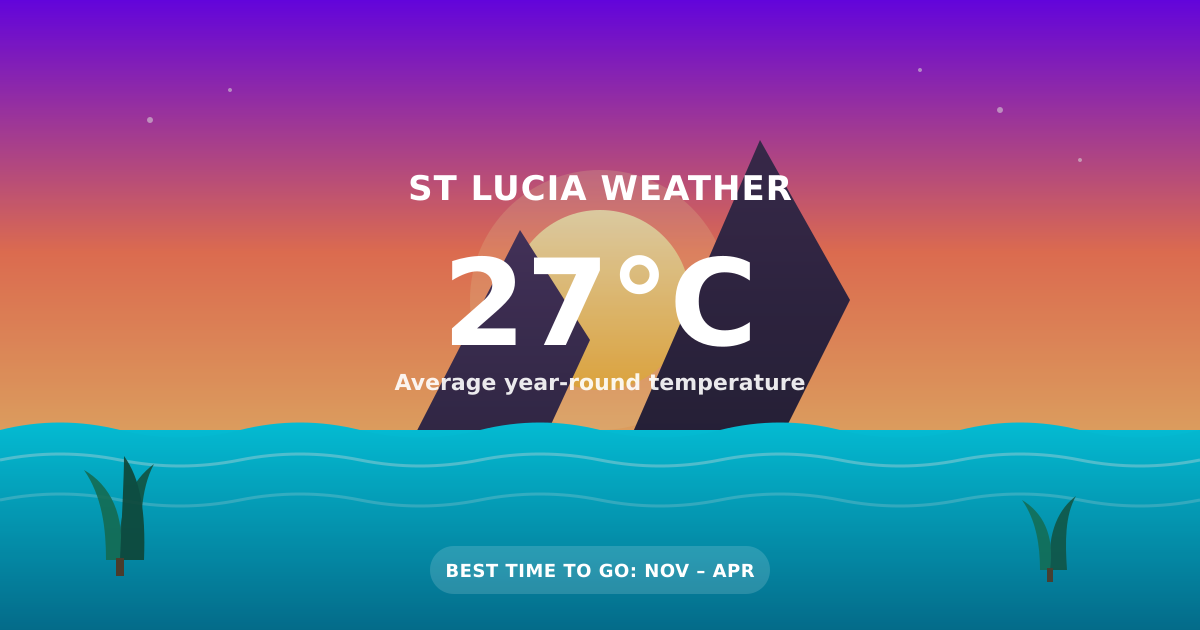
Table of Contents
- St Lucia Climate Overview
- Best Time to Visit St Lucia
- St Lucia Weather at a Glance
- Rainfall & Temperature Chart
- Saint Lucia Climate Guide by Destination
- St Lucia Weather by Month
- Dry Season (November–April)
- Rainy Season (May–October)
- Hurricane Season in St Lucia
- What to Pack for St Lucia's Climate
- Best Season for Activities
- Frequently Asked Questions
St Lucia Climate Overview
St Lucia has a tropical climate, which means it doesn't really have a "cold" season — temperatures stay warm year-round, typically between 25°C and 30°C depending on where on the island you are. What actually changes through the year isn't temperature so much as humidity, rainfall, and the chance of tropical storms.
Broadly, the island splits into two seasons:
- Dry season — roughly November through April, with lower humidity and noticeably less rainfall
- Rainy season — roughly May through October, warmer and more humid, with short, heavy afternoon showers
- Hurricane season — officially June 1 to November 30, overlapping most of the rainy season
- Peak tourist season — mid-December through April, driven by dry weather and Northern Hemisphere winter travel
Best Time to Visit St Lucia
Quick answer: The best time to visit St Lucia is between November and April, when rainfall is lowest, humidity is more comfortable, and hurricane risk is essentially zero. If you want similar weather with smaller crowds and lower prices, aim for the shoulder months of late April or early November.
November through April is peak season for a reason — this is when St Lucia sees its driest, sunniest stretch, making it ideal for beach days, hiking the Pitons, and boat excursions. The trade-off is higher prices and busier resorts, especially around Christmas, New Year, and February half-term.
St Lucia Weather at a Glance
Here's how average temperature and monthly rainfall break down across the year. The highlighted months mark the dry season, when St Lucia sees its lowest rainfall and most consistent sunshine.
Rainfall & Temperature Chart
Seeing rainfall and temperature plotted side by side makes the seasonal pattern easier to spot at a glance — temperatures stay in a narrow warm band all year, while rainfall is what really swings between the dry and wet months.
Saint Lucia Climate Guide by Destination
Weather also varies slightly depending on where you're staying. Rodney Bay in the drier north tends to see less rainfall than Soufrière and Anse La Raye in the mountainous southwest, even though temperatures stay similar island-wide.
| Destination | Jan | Feb | Mar | Apr | May | Jun | Jul | Aug | Sep | Oct | Nov | Dec |
|---|---|---|---|---|---|---|---|---|---|---|---|---|
| Anse La Raye | 28°C 137mm |
28°C 104mm |
28°C 99mm |
29°C 113mm |
30°C 145mm |
30°C 209mm |
30°C 291mm |
30°C 263mm |
30°C 259mm |
30°C 303mm |
29°C 278mm |
28°C 176mm |
| Rodney Bay | 28°C 113mm |
28°C 86mm |
29°C 76mm |
29°C 96mm |
30°C 124mm |
30°C 182mm |
30°C 245mm |
30°C 216mm |
30°C 224mm |
30°C 269mm |
29°C 255mm |
29°C 149mm |
| Soufrière | 28°C 137mm |
28°C 104mm |
28°C 99mm |
29°C 113mm |
30°C 145mm |
30°C 209mm |
30°C 291mm |
30°C 263mm |
30°C 259mm |
30°C 303mm |
29°C 278mm |
28°C 176mm |
Notice Rodney Bay consistently runs a little drier than Soufrière and Anse La Raye year-round — a side effect of the mountainous southwest catching more rainfall than the flatter northern coast. If your itinerary includes both, it's worth packing a light rain layer even during the drier months if you're heading toward Soufrière and the Pitons.
St Lucia Weather by Month
Averages only tell part of the story, so here's a closer look at what each month actually feels like on the ground — from temperature and rainfall to crowds, events, and the best activities to plan around.
January
Dry SeasonPerfect for grabbing some winter sun. Rainfall is much lower than during the autumn months. Thanks to the northeasterly trade winds, expect a cooling breeze that takes the edge off the heat.
February
Dry SeasonOne of the driest and least humid months of the year, with an average of just 32mm of rain. The low humidity makes it a great month for a guided hike up Gros Piton.
March
Dry SeasonDry, sunny weather and the lowest average monthly rainfall of the year. The island gets busier though, with higher hotel and flight prices around the Easter holidays.
April
Dry SeasonMarks the end of the high season, with rising sunshine hours. One of the best months for swimming, since sea temperatures are at their warmest heading into May.
May
ShoulderThe shoulder season before the wet season begins, with gradually rising humidity. Good value timing, and the first half of the month brings the St Lucia Jazz Festival.
June
Wet SeasonOfficially the start of the wet season, with rainfall roughly doubling versus May. Still good value — plenty of sunshine without the summer holiday crowds.
July
Wet SeasonWarm, humid days with short, heavy afternoon showers. St Lucia's Carnival typically takes over the island with parades, soca music, and street parties.
August
Wet SeasonThe warmest and most humid month of the year. Sits within hurricane season, so afternoon storms are more frequent, though mornings are often still clear.
September
Wet SeasonOne of the quietest months for tourism, meaning lower prices. Falls near the peak of hurricane season, so book flexible dates and watch storm forecasts.
October
Wet SeasonTypically the wettest month of the year. The upside is a dramatically lush, green landscape — waterfalls and rainforest trails are at their most impressive.
November
ShoulderMarks the transition back toward the dry season, with hurricane risk winding down by month's end. A strong pick for dry-season weather at lower prices.
December
Dry SeasonThe dry season returns, with rainfall dropping sharply after November. The back half of the month gets busy and pricier around Christmas and New Year.
Dry Season (November–April)
The dry season is when most visitors plan their St Lucia trip, and for good reason. Rainfall drops noticeably, humidity is more manageable, and skies stay clearer for longer stretches — ideal conditions for beach time, catamaran trips, and hiking.
- Best months for consistently sunny, low-rainfall weather: January, February, March
- Lower humidity makes hiking the Pitons noticeably more comfortable
- Peak pricing and the busiest resorts fall in this window, especially over Christmas, New Year, and Easter
- Late April and early November offer similar weather at lower prices, as the season transitions
Rainy Season (May–October)
"Rainy season" sounds more dramatic than it usually is in practice. Most days still include plenty of sunshine — the difference is short, heavy downpours, often in the afternoon, followed by clear skies again. Humidity climbs, and the island turns noticeably greener and lusher.
- Showers tend to be brief and intense rather than all-day rain
- Lush scenery and waterfalls are at their most dramatic during these months
- Hotel rates and flight prices typically drop compared to peak season
- September and October see the heaviest average rainfall
Hurricane Season in St Lucia
Atlantic hurricane season officially runs from June 1 to November 30, with the highest risk concentrated between mid-August and mid-October. St Lucia sits far enough south in the Caribbean that it's historically been affected less often than islands further north, but it isn't immune, and named storms can still bring heavy rain and rough seas even without a direct hit.
If you're traveling during this window, it's worth building in some flexibility — travel insurance that covers weather disruption, and keeping an eye on forecasts from the National Hurricane Center as your trip approaches.
What to Pack for St Lucia's Climate
- Lightweight, breathable clothing for high humidity, especially May–October
- A light rain jacket or packable poncho if traveling in the wetter months
- Sturdy shoes for hiking the Pitons or rainforest trails
- Reef-safe sunscreen, since the sun is strong year-round
- A light layer for cooler evenings in higher-elevation areas like Soufrière
Best Season for Activities
Different trip goals line up better with different months:
- Beach and boat days — best November through April, when seas are calmer and rainfall is lowest
- Hiking the Pitons — best in the dry season for firmer trails and clearer views; see our full St Lucia Pitons guide for trail details and permits
- Whale and dolphin watching — strongest sightings tend to fall between November and April
- Budget travel — best value in late April–June or September–November, outside peak pricing
- Waterfalls and rainforest photography — most dramatic during the lush, rainy months, especially October
Whatever time of year you land, the drive from the airport to your hotel is one part of the trip worth locking down ahead of time — especially during the rainy season, when a pre-booked private tour or transfer avoids waiting around for transport in a sudden downpour.
Frequently Asked Questions
What is the best month to visit St Lucia?
February and March generally offer the most reliably dry, sunny weather with the lowest rainfall, though January and December are close behind.
When is hurricane season in St Lucia?
Officially June 1 through November 30, with the highest risk between mid-August and mid-October.
Does it rain a lot in St Lucia?
Rainfall is heaviest from June to October, peaking in October at around 139mm island-wide (even higher in Soufrière and Anse La Raye), but showers are usually short and heavy rather than all-day.
Is St Lucia hot all year round?
Yes, temperatures stay warm year-round, generally between 25°C and 30°C depending on location, with humidity and rainfall being the bigger seasonal variables.
What is the cheapest time to visit St Lucia?
Late April to June and September to early November tend to offer the lowest hotel and flight prices, since they fall outside peak season.
Is it safe to travel to St Lucia during hurricane season?
Generally yes, since direct hits are relatively rare, but it's worth traveling with flexible bookings and travel insurance during peak hurricane months.
Final Thoughts
There's no single "wrong" time to visit St Lucia — it comes down to what you're optimizing for. If guaranteed sunshine and calm seas matter most, aim for November through April. If you're chasing lower prices, greener landscapes, and don't mind the occasional afternoon shower, the shoulder and rainy-season months can be just as rewarding, minus the crowds.
Planning Your St Lucia Trip?
Whatever the season, get from the airport to your hotel — or out to the Pitons — without the stress. Book a reliable transfer or private tour with St Lucia Taxi & Tours.