
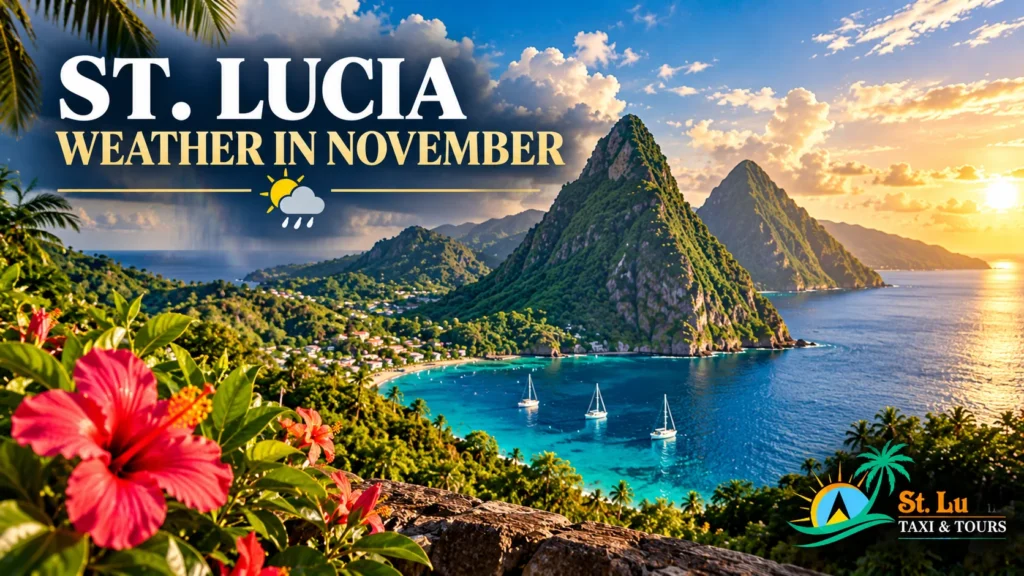

What Is the Weather Like in St. Lucia in November?
St. Lucia sits just 14 degrees north of the equator, so it is warm all year. What changes from month to month is the rain. November is the last month of the wet season, which means lush green hills, full waterfalls and the odd heavy shower, but rarely a whole day of rain.
Temperature in St. Lucia in November
The average temperature in St. Lucia in November is around 27–28°C (81–82°F). Days usually reach 29–31°C (84–88°F) on the coast, and nights stay warm at about 23–25°C (73–77°F), so a light sheet is all you need. It is cooler in the mountains and in the rainforest, which can feel a few degrees fresher than the beach.
With the sun high in the sky, the UV index is very high, often around 9 or more. Even on cloudy days you can burn quickly, so use reef-safe sunscreen and a hat.
Does it rain a lot in St. Lucia in November?
Yes, November is one of the wetter months. Average rainfall is roughly 150–255 mm (6–10 inches), depending on where you measure it, and there is some rain on 18 to 20 days of the month. That sounds like a lot, but most of it comes as short, heavy tropical showers that pass in 20 to 30 minutes, often in the afternoon or overnight, with sunshine before and after.
A few days each month can bring longer spells of rain when a tropical wave passes. On those days, roads in the hills can become slippery and some trails get muddy, so it pays to keep your plans flexible.
Humidity, sunshine and sea temperature
- Humidity: high, usually around 75–80%, so it feels hotter than the thermometer says.
- Sunshine: about 8 hours a day, out of around 11.5 hours of daylight.
- Sea temperature: about 28°C (82°F), warm enough to stay in the water for hours.
- Sunset: around 5:40 p.m., so plan tours to finish before dark.
Early vs late November
The weather changes during the month. Early November still feels like the rainy season, while the last week often starts to feel like the dry season ahead.
| Period | Rain | Feel | Good for |
|---|---|---|---|
| November 1–15 | More frequent showers, some longer spells | Hot, humid, very green | Waterfalls, spa days, best hotel deals |
| November 16–30 | Fewer, shorter showers | Hot, a little breezier | Beach days, boat trips, hiking |
These figures are long-term averages from climate sources such as Weather2Travel. For the days around your trip, check the local forecast a few days before you fly.
St. Lucia November Weather by Area
St. Lucia is small, but its mountains create different weather from one side of the island to the other. Where you stay and where you go can make a real difference in November.

Castries, Rodney Bay and the north
The north-west coast, home to Castries, Rodney Bay and Gros Islet, gets regular showers in November, but they tend to clear quickly. This is where most resorts, restaurants and the cruise port are, so it is easy to wait out the rain in a café or bar.
Soufrière and the west coast
Around Soufrière and the Pitons, rain often builds over the mountains in the afternoon. Morning is the best time for views of the peaks, before the clouds gather. The upside is that waterfalls like Toraille and Diamond Falls are at their fullest in November.
The rainforest and central mountains
The interior is the wettest part of the island and can get rain on most days in November. Rainforest hikes are still possible, but trails get muddy and slippery, so wear shoes with good grip and go with a guide.
Vieux Fort and the south
The flatter south, near Hewanorra International Airport, is often a little drier and breezier than the mountains. Trade winds make it pleasant, and it is a good area for a beach stop if the west coast is cloudy.
Things to Do in St. Lucia in November
November weather suits a "sun first, shelter second" plan: do outdoor sights in the morning, keep a rain-friendly idea for the afternoon, and you will rarely lose a day. Here is what works best this month.

Best on sunny days
- The Pitons and Soufrière. Go early for clear views of the peaks, then visit Sulphur Springs and a waterfall before the afternoon clouds. Our volcano and waterfall tour covers it all in one day.
- Waterfalls. Toraille Waterfall and Diamond Falls are at their fullest after the rainy season.
- Beaches and snorkeling. The sea is around 28°C, and the sheltered west coast, from Anse Chastanet to Sugar Beach, stays calm on most days.
- A boat trip down the coast. Morning sailings have the calmest water. See our private boat tour options.
- Pigeon Island. Climb Fort Rodney for views over Rodney Bay, then swim at the park's beach.
- Deep-sea fishing. Charters run all year from Rodney Bay and Vieux Fort, with tuna and wahoo among the common catches.
Rain-friendly ideas
- A chocolate experience. Make your own bar on a St. Lucia chocolate tour, mostly under cover.
- Sulphur Springs mud baths. You get wet anyway, so a shower does not matter.
- Rum tasting at St. Lucia Distillers in the Roseau Valley.
- Castries Market and the cathedral, both indoors and close together.
- A spa day or cooking class at your resort.
Events in November
November is a quiet month for big festivals, which is part of its appeal. You can still enjoy the weekly Gros Islet Friday Night Street Party and the Anse La Raye Friday fish fry, both held rain or shine. By late November, sailing crews begin preparing for the season's yacht arrivals in Rodney Bay, and Christmas decorations start to appear in Castries.
- Day 1: Soufrière, the Pitons, Sulphur Springs and Toraille Waterfall, leaving early to beat the clouds.
- Day 2: A morning boat trip, then an afternoon chocolate experience in case of rain.
- Day 3: Castries Market, Morne Fortune and Pigeon Island, ending at the Gros Islet street party if it is a Friday.
For a full list of sights, see our guide to the best places to visit in St. Lucia, and for year-round ideas, read our guide to the best things to do in St. Lucia.